Booking choice: The 2-day Ha Long and Lan Ha cruise, from $126 per person. Check dates Tour details
Lan Ha Bay has two seasons that matter to a boat trip. From November to March it is cool and dry, with misty mornings and water too cold for most swimmers. From May to September it is hot, wet and green, with warm water and a real chance of a storm closing the bay for a day or two.
The best weeks sit between the two. Below: the month-by-month table, what fog and storms actually do to a cruise, the Tet 2027 dates and surcharges, and straight answers on Hanoi and the rest of Vietnam.
The quick answer
Go in April or May, or from late September to November. Avoid July and August if you can't afford a cancelled day: that is the core of the typhoon season. January and February are cold and foggy in the mornings, and the Tet holiday (Lunar New Year falls on 6 February 2027) adds surcharges on many boats.
What is the best month to go to Halong Bay and Lan Ha Bay?
April. Days reach about 27 C, the sea warms to about 23 C, rain is light and storms are rare. May, October and November are the next best.
April has the lot: the winter mist has gone, the summer storms haven't started, and the water is just warm enough for a swim stop. May is hotter (around 31 C) with warmer water and more afternoon showers. In October the sea is still about 28 C from the summer, the air cools to the high 20s and the storm risk drops fast.
For Lan Ha specifically, the shoulder months win twice. The beaches and lagoons it is known for are best in calm water, and a cancelled day costs more when you have already ridden 4 to 5 hours to Cat Ba. Late September is good value but still carries some storm risk.
What is Lan Ha Bay weather like month by month?
Cool and dry with morning fog from December to March, warm and clear in April and May, hot and stormy from June to September, then clear and mild in October and November.
Air and sea figures are weather2travel's Ha Long Bay averages (daytime highs); rain is the monthly average. Fog and storm notes come from cruise operators and our sources below.
| Month | Air | Sea | Rain | Fog | Typhoon risk | Crowds |
|---|---|---|---|---|---|---|
| Jan | 20 C | 19 C | 27 mm | Common in the morning | None | High season, cold |
| Feb | 20 C | 19 C | 31 mm | Common in the morning | None | Tet peak (6 Feb 2027) |
| Mar | 23 C | 20 C | 43 mm | Light early mist | None | High season |
| Apr | 27 C | 23 C | 91 mm | Mostly clear | Very low | High; 30 Apr holiday |
| May | 31 C | 27 C | 168 mm | Clear | Low | High early in the month |
| Jun | 32 C | 29 C | 244 mm | Clear | Rising | Vietnamese summer peak |
| Jul | 32 C | 29 C | 267 mm | Clear | High | Vietnamese summer peak |
| Aug | 32 C | 30 C | 312 mm | Clear | High | High |
| Sep | 31 C | 29 C | 206 mm | Clear | High early, easing | Medium; 2 Sep holiday |
| Oct | 29 C | 28 C | 119 mm | Clearer skies | Low | High season starts |
| Nov | 25 C | 25 C | 55 mm | Some mid-month mornings | Low | High season |
| Dec | 22 C | 22 C | 24 mm | Haze some mornings | None | High around 24 and 31 Dec |
Free cancellation up to 24 hours before: book the shoulder months early and keep your options open.
Check dates for the 2-day Ha Long and Lan Ha cruiseWhen should you not visit Halong Bay?
July and August carry the highest storm risk, and the Tet week brings surcharges and sold-out transport. Summer weekends on Cat Ba are busy with domestic visitors.
Typhoons reach the Gulf of Tonkin mainly from July to September. Not every year brings a direct hit, but closures are routine: Quang Ninh kept Ha Long boats in port for Typhoon Wipha in July 2025 and Tapah in September 2025, Hai Phong closed the sea for Kajiki in August 2025, and both bays stopped for Storm Narra in August 2026. Typhoon Yagi in September 2024 hit Quang Ninh and Hai Phong hard.
Crowds are a separate problem. June and July are Cat Ba's domestic peak (the Hai Phong city portal counted about 1.6 million visitors in the first half of 2024, two-thirds of them Vietnamese), and the 30 April, 1 May and 2 September holidays fill the ferries. October to April is the international high season (the Rita cruise charges a peak supplement for exactly those months), and in the cold months the swim stops become look-but-don't-touch.
Is it always foggy in Halong Bay?
No. Fog is a winter thing, common on January and February mornings and lighter in March, and it usually lifts by 8:30 to 9:00.
Mist also turns up on some mornings in early February and mid-November, then burns off by mid-morning. A misty sunrise among the karsts is a look many people go for, and the afternoon sail is usually clear. From April to October fog is rare.
If views matter most, book a 2-day cruise rather than a day trip in winter: you get a second morning, and the odds that one of them is clear go up a lot.

What happens if a storm closes Lan Ha Bay?
The city suspends all sea activities, boats stay in port and tours are cancelled or rerouted; when the operator cancels for weather, the booking price is refunded.
Closures are ordered by the authorities, not chosen by crews. For Storm No. 5, Kajiki, Hai Phong suspended sea activities from 13:00 on 24 August 2025 and reopened at 10:00 on 26 August. For Storm Narra, DTiNews reported that Ha Long and Lan Ha tours and overnight stays were suspended from 7:00 on 22 August 2026 until conditions were safe.
- Operator cancels: GetYourGuide's terms say a supplier may cancel for adverse weather or government action, and the booking price is then refunded.
- Itinerary changes: cruise listings warn that routes can change at short notice for weather or tides; a cave may be swapped, not the whole trip.
- Your own cancellation: every tour on this site is free to cancel up to 24 hours before.
- Your bus, hotel and flights are separate bookings, so travel insurance is worth it from July to September.
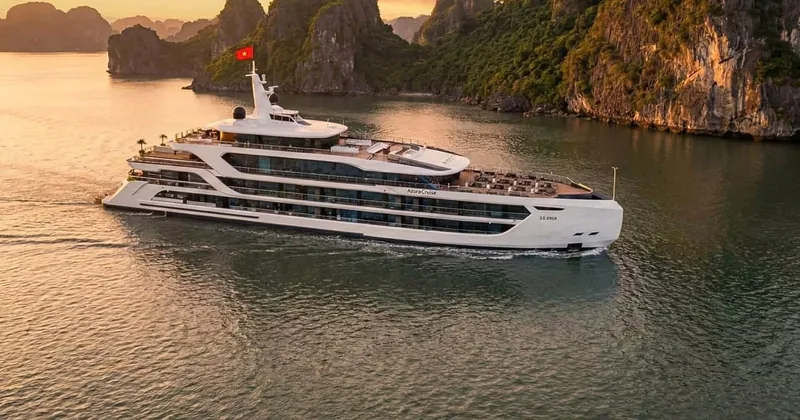
If you want the ship to be the point, the Azura has a pool, spa and bay-view bathtub for days when the weather keeps everyone on board.
Explore the 6-star Azura cruise Tour detailsWhen is Tet 2027 and what does it cost?
Lunar New Year falls on Saturday 6 February 2027; the proposed official break runs 4 to 10 February. Many boats add a surcharge for those dates.
Tuoi Tre reported the 6 February date and the ministry's backing for a seven-day break; the final schedule is set by the prime minister. Jungle Boss Tours notes that small restaurants and family shops close for the first three days, while hotels and the tourist strips stay open, and that trains and buses sold out weeks ahead for Tet 2026. Book transport early.
Surcharges we found on the listings, per person:
- Carnival 2-day cruise: $40 on 24 December, 31 December and Lunar New Year.
- Azura 6-star cruise: $5 at Tet.
- Hanoi day cruise: 150,000 VND from 5 to 8 February 2027.
- Rita 3-day cruise: $25 in peak season, 1 October to 30 April.
- The 2-day 5-star cruise adds an unstated surcharge on New Year, Christmas and national holidays.
Which month should you avoid in Hanoi?
June to August: Hanoi's hottest and wettest stretch, with highs around 34 C and the year's heaviest rain. Tet week is the other one to think about.
North-vietnam.com puts Hanoi's best months at March and April and September to November, and its worst at June to August. vietnamtourism.com adds that July and August are the most humid, around 80 to 85 percent, with flash flooding in some streets after heavy rain. The rainy season is also dengue season, so pack repellent.
Tet is different: the weather is fine, but many small businesses shut from 6 to 8 February 2027 while families celebrate. Hotels, chains and convenience stores stay open. If you want street food and markets, come a week either side.
Visiting in the hot months? A cabin with air-conditioning, a bathtub and a pool is the easy way to do Lan Ha in July.
Check dates for the 2-day Ha Long and Lan Ha cruiseWhat is the rainiest month in Vietnam's north?
August. Hanoi averages about 309 mm in August and Ha Long about 312 mm; July is close behind.
The Hanoi figure is the long-term average from the Vietnam Institute for Building Science and Technology; the Ha Long figure is weather2travel's. Summer rain in the north usually comes as afternoon downpours, roughly 14:00 to 17:00, rather than all-day grey, so a morning on the water often stays dry.
The rest of the country runs on a different clock. Central Vietnam's flood season peaks in October and November (vietnamtourism.com calls November the worst month for Hue and Hoi An), which is exactly when the north is at its best.

Frequently asked questions
When's the worst time to go to Vietnam?
It depends on the region. In the north, June to August is hot and wet, and storms close Ha Long and Lan Ha bays for a day or two at a time, mostly July to September. On the central coast, October and November bring the floods. Tet week is busy and pricey everywhere.
Is the water warm enough to swim in winter?
For most people, no. The sea averages about 19 to 20 C from January to March and 22 C in December. It reaches about 23 C in April and 27 to 30 C from May to September.
Is October a good time to visit Lan Ha Bay?
Yes, one of the best. The sea is still about 28 C, rain falls to about 119 mm, the storm risk drops and the skies are clearer than in winter.
Do cruises run in the rainy season?
Yes. Most summer rain comes as afternoon showers. What stops boats is a storm warning, when the authorities close the bay, usually for a day or two.
Ready to book
Choose your trip
Free cancellation up to 24 hours before on every option. Prices are from-prices in USD and move with the season.

2-Day Ha Long & Lan Ha 5-Star Cruise
- Balcony cabin with private bathtub, one night
- All meals on board, vegetarian options
- Kayaking, swimming, tai chi, squid fishing, cooking class
6-Star Azura Cruise, 2 or 3 Days
- Balcony cabin with bay-view bathtub
- All meals, welcome drink, sunset tea break
- Kayaking in Ao Ech lagoon, swim stops, cooking class

Cat Ba Full Day: Boat, Kayak & Viet Hai Bike
- Hotel pickup and drop-off on Cat Ba Island
- Boat trip with kayaking through Bright, Dark and Bat caves
- Swim stop at Ba Trai Dao beaches